
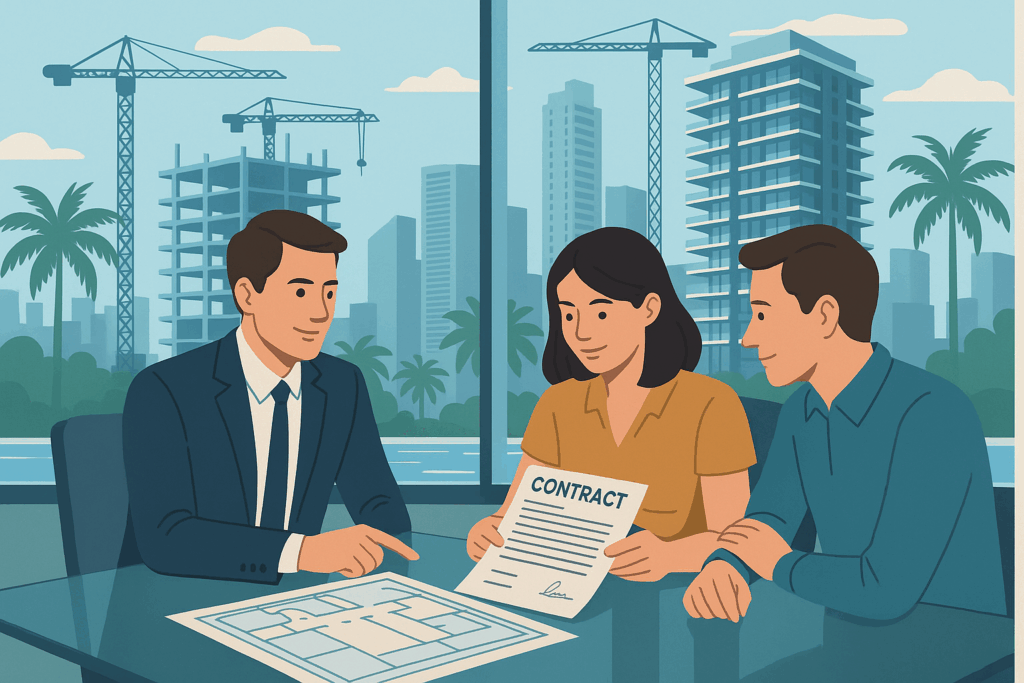
Buying a pre-construction condo in Florida is exciting — but before you sign anything, it’s crucial to understand what’s in your purchase agreement.
This document outlines everything from your deposit schedule to completion timelines, and knowing how to read it can help you avoid surprises later.
Here’s a breakdown of what to look for and why it matters.
1. Developer and Project Details
Start with the basics — confirm the legal name of the developer, the project address, and the entity responsible for construction.
Reputable developers usually build under a registered Florida corporation or LLC, which you can verify through Sunbiz.org or the Florida Department of Business and Professional Regulation (DBPR).
This section should also include:
- A description of the property (number of units, floors, amenities)
- The estimated completion and delivery date
- Any approvals or permits already in place
If anything seems incomplete or “to be determined,” that’s a red flag.
2. Deposit Structure and Escrow Protection
One of the most important sections for buyers covers how and where your deposits are held.
Florida law (Statute 718.202) requires that buyer deposits for new condos be kept in an escrow account with a licensed title company or law firm.
Make sure the contract clearly lists:
- The name of the escrow agent
- How much you’re required to deposit
- The timing of each installment
- Conditions under which the deposit is refundable
Your agent or attorney should also confirm that the funds are protected until closing or cancellation — not used for construction expenses.
3. Construction Timeline and “Outside Date”
Every pre-construction contract includes an estimated completion date, and most include an “Outside Date” — the maximum time allowed for the developer to finish the project.
If the project isn’t completed by the Outside Date, buyers may have the right to cancel and receive a full refund of their deposit.
Pay attention to:
- How long the developer can extend timelines
- What counts as a “permissible delay” (weather, permitting, labor shortages)
- Whether the developer must notify you in writing of any changes
This clause protects you if the project experiences unexpected setbacks.
4. Contract Cancellation and Refund Rights
This section explains when and how either party can terminate the contract.
You typically have the right to cancel within 15 days of signing under Florida’s condominium laws — this is your rescission period.
After that, cancellation rights depend on the specific terms.
You may be eligible for a refund if:
- The developer fails to complete the project by the Outside Date
- The project’s design or features change materially
- The condo documents are amended in a way that affects your unit
Always keep copies of your signed documents and all email communications — they’re part of your protection.
5. Unit Description and Finish Schedule
This part lists the specific details of your unit: floor number, layout, square footage, and interior finishes.
Pay attention to:
- Whether measurements are “approximate” (they often are)
- If finishes are listed as “subject to change”
- Whether furniture packages or appliances are included
Developers reserve the right to make substitutions, but reputable ones will provide materials of equal or greater quality.
6. Maintenance, HOA, and Closing Costs
Your contract should clearly outline monthly HOA fees, estimated taxes, and closing costs (title fees, recording, etc.).
Confirm:
- Whether developer-paid incentives (like free HOA for a year) are in writing
- If your share of common expenses is based on square footage or a fixed allocation
- What you’ll owe at closing beyond your final deposit
These numbers help you calculate the true carrying cost of your investment.
7. Warranties and Post-Closing Obligations
Most Florida developers offer a 1-year workmanship warranty and structural warranties under state law.
This section explains how repairs or defects are handled after closing and which systems are covered (HVAC, plumbing, etc.).
If you plan to rent or assign your unit, make sure you understand the developer’s restrictions on resale or rental before completion.
8. The Fine Print: Always Review with a Professional
Even though Florida contracts are standardized, every developer adds their own clauses.
Before signing, have your real estate attorney or broker review the agreement line by line.
A good advisor will flag:
- Non-refundable clauses
- Assignment restrictions
- Language allowing material changes to the project
Spending a little time up front can save you major stress — or money — later.
A pre-construction contract is more than paperwork — it’s the blueprint for your entire purchase.
Knowing what to look for protects your investment and gives you confidence through each stage of development.
If you’re exploring Miami pre-construction condos, the team at Condos Global can help you compare deposit structures, developer terms, and upcoming projects before you buy.
📲 Learn more at CondosGlobal.com
👉 [Browse Our Latest Florida Condo Listings]
👉 [Book a One-on-One Strategy Call]